The Biggest IPO Ever Was an AI Company. Here's What Main Street Should Take From It.
Anthropic raised a record amount of money, and its first two days of trading show both sides of the AI story.

This week, an AI company that most people outside tech couldn't have named three years ago pulled off the biggest IPO in history. It rose 17% on its first day and then gave back a chunk of that the next.
That's the AI economy in two days: huge money, real revenue and plenty of nerves. Here's what happened, and why I think it matters for people running regular businesses.
The deal, by the numbers
According to CNBC (Nov. 18, 2026) and Anthropic's own pricing announcement (Nov. 18, 2026):
- Anthropic priced its IPO at $83 a share, above the expected range of $70 to $78.
- It increased the offering to about 980 million shares, raising $81.3 billion. That beat the record SpaceX set in June.
- Its fully diluted market value came out to around $1.5 trillion.
- The stock trades on the Nasdaq under the ticker ANT.
Once the deal closed, the totals got bigger. Anthropic said on Nov. 20, 2026 that underwriters bought their full option of additional shares. That brought gross proceeds from the IPO to about $93.5 billion. Separately, AMD, Broadcom, Google, Micron, Microsoft, Nvidia and TSMC Partners bought about $26.0 billion of stock in a private placement at the same $83 price. Including both, the total came to roughly $119.5 billion.
The business behind the valuation
This isn't a startup with a slide deck and no revenue. From the prospectus figures reported by CNBC:
- Revenue for the nine months ended Sept. 30: $33.24 billion, up about 1,200% from the same period a year earlier.
- Run-rate revenue at the end of October: about $81 billion, up $10 billion from the month before.
- Net loss for the same nine months: $104 billion. CNBC noted most of it came from accounting changes in the fair value of convertible notes and derivatives.
CNBC said much of the 2026 growth came from Claude Code, Anthropic's AI coding tool, and that the company mainly sells to other businesses. The prospectus also included more than 90 pages of risk factors.
The first two days of trading
The stock jumped 17% on its first day, Thursday, Nov. 19. On Friday it fell 8.5% while the rest of the AI sector sold off (CNBC, Nov. 20, 2026). CNBC pointed out that the first-day pop was smaller than the debuts of Circle, Figma, Cerebras and SpaceX.
Regular investors showed up for it, too. Vanguard said Anthropic was the most-traded single stock among its self-directed customers on Thursday. Those buyers purchased a median of 20 shares, or about $1,950 worth (CNBC, Nov. 20, 2026).
Why this matters if you run a small business
1. AI spending has moved past the hype stage
Revenue in the tens of billions means businesses are paying real money for these tools every month. Like it or not, your competitors are trying them. The question for a local business isn't whether AI is real. It's which tasks it actually saves you time on.
In my world, building websites and marketing for local service businesses, the honest answer is first drafts, research and repetitive admin work. It doesn't replace judgment, your relationships with customers or knowing your city.
2. The money and the risk are concentrated
When a handful of tech giants are investors, partners and suppliers to the same company all at once, the ecosystem gets very tangled. CNBC noted that Amazon and Google each hold Anthropic stakes valued at over $100 billion. Anthropic, in turn, buys expensive computing systems from Nvidia, Google, Amazon and AMD.
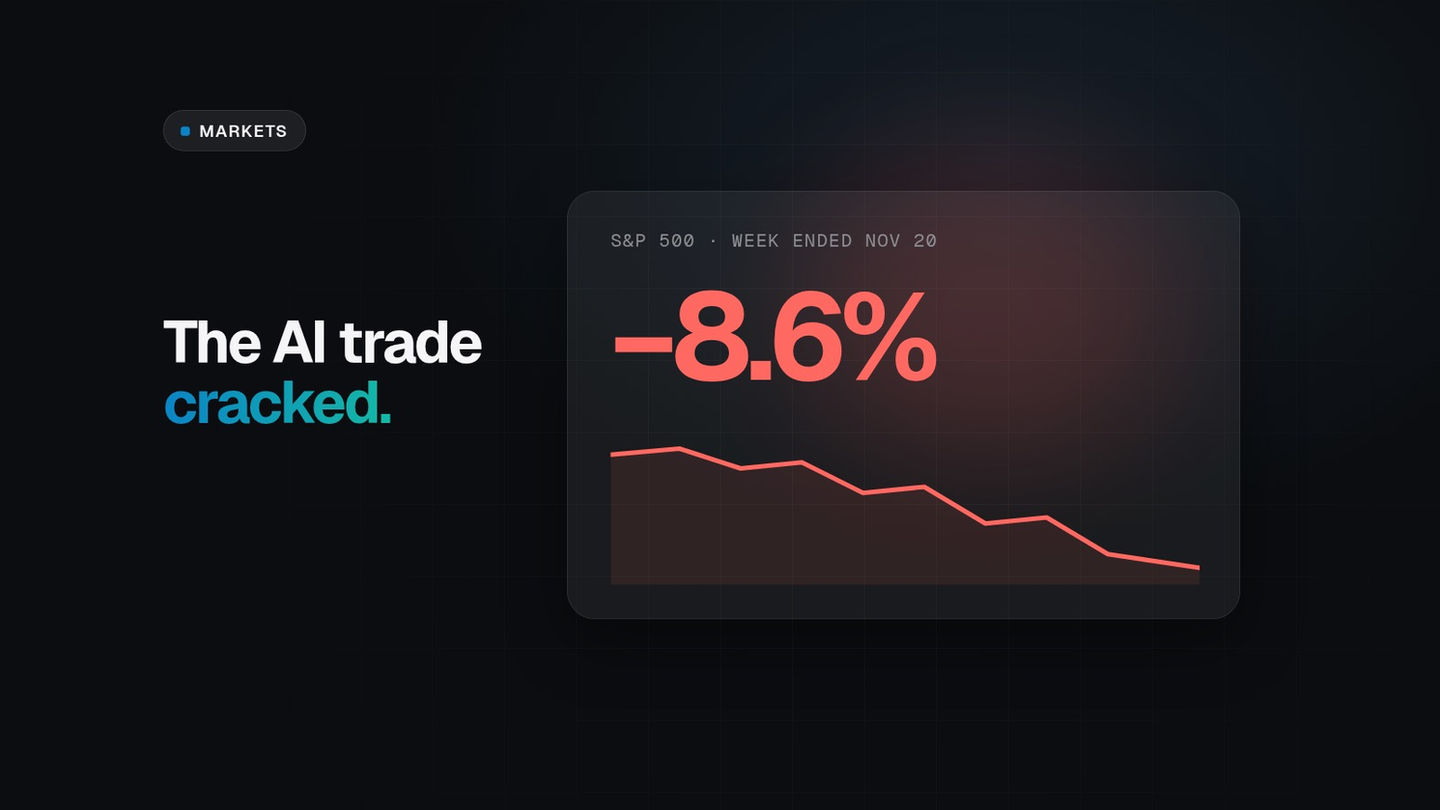
That's fine when things are going well. When they're not, everyone gets hit together, which is part of what happened in the market this week.
3. Don't build your business on one AI vendor
This is the same lesson as every platform shift. If you start using AI tools in your business, keep your own data, your own processes and your own customer list. Use the tools; don't let one of them become the only way your business runs.
4. FOMO is not a strategy
I get the excitement. But a stock that jumps 17% and then drops 8.5% the next day is a reminder that a hot IPO can still be a volatile investment. I'm not telling anyone whether to buy or sell anything. I'm saying that how big the headline is tells you nothing about the risk.
My take
I think the Anthropic IPO is a genuine milestone. A company selling AI mainly to other businesses reached a valuation in the trillions. That says something about where business spending is going over the next decade.
For founders like me, the move isn't to chase the stock. It's to get good at using the tools, faster than your competitors and without giving up what makes your business yours.
This post is commentary, not investment advice.
Sources
- CNBC, "Anthropic IPO raises over $81 billion in largest offering on record, topping SpaceX," Nov. 18, 2026: https://www.cnbc.com/2026/11/18/anthropic-ipo-ai-offering-price.html
- Anthropic, "Anthropic prices initial public offering," Nov. 18, 2026: https://www.anthropic.com/news/anthropic-prices-initial-public-offering
- Anthropic, "Anthropic announces closing of initial public offering...," Nov. 20, 2026: https://www.anthropic.com/news/ipo-close
- CNBC, "Stock market news for Nov. 20, 2026": https://www.cnbc.com/2026/11/19/stock-market-today-live-updates.html
Keep reading
All articles
One email. Every Sunday.
The week in business, markets and politics, in five minutes.