The Survival Math Nobody Tells Young Founders
About half of new businesses are gone within five years. Cash flow is the skill that keeps you in the other half.

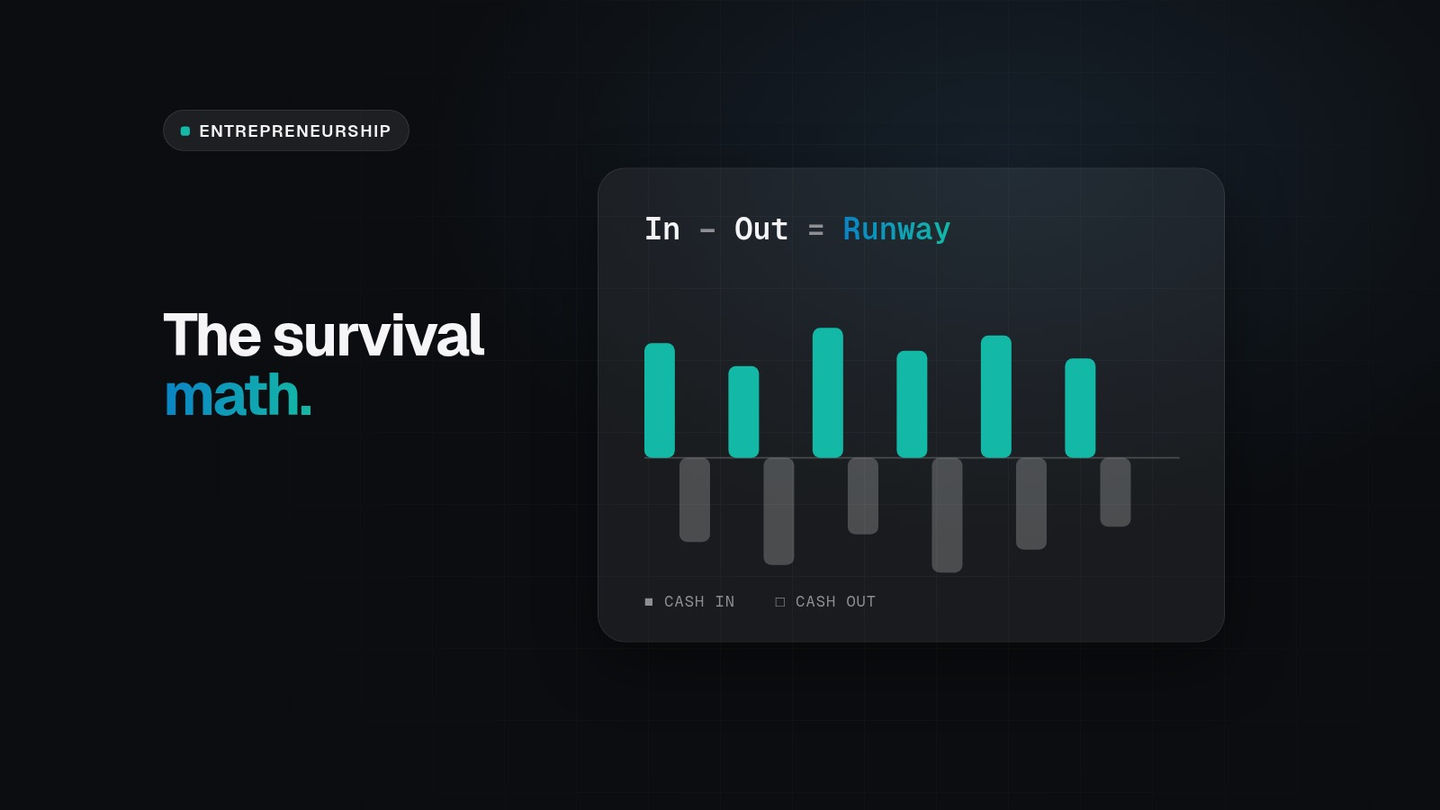
Starting a business is the easy part. Filing the paperwork, opening a bank account and printing business cards can all happen fast.
Staying open is the hard part. The numbers are clear about it, and almost nobody shows them to young founders before they start.
The real numbers
The U.S. Bureau of Labor Statistics tracks every new business location in the private sector and how many are still open each year. From BLS Business Employment Dynamics, Table 7 (data through March 2026):
- Of the establishments that opened in the year ending March 2021, 79.1% were still open a year later. That means about one in five closed in year one.
- By March 2025, four years in, 52.3% were still open.
- By March 2026, five years in, the number was 47.2%. More than half had closed.
- Go back further and it gets starker. Of the establishments that opened in the year ending March 1994, only 12.0% were still around in March 2026.
That's not meant to scare you off. Small business is the economy. The SBA Office of Advocacy (Feb. 3, 2026) counts 36,207,130 small businesses in the U.S., which is 99.9% of all businesses. They employ 62.3 million people, or 45.9% of private-sector workers.
The point is that surviving is a skill, and you can learn it.
Profit and cash are not the same thing
This is the lesson I wish every 22-year-old founder got on day one.
Profit is what your income statement says you earned. Cash is what's in the bank account right now. You can be profitable on paper and still miss payroll, because the client who owes you $5,000 pays in 45 days and rent is due on the 1st.
The SBA's guide to managing your finances explains the two basic accounting methods. Under the accrual method, a sale goes on the books when it's made. Under the cash method, it's only recorded once you're paid. Whichever method your accountant uses for taxes, run your week-to-week decisions on cash.
The five-part cash system
You don't need fancy software for this. You need these five habits.
1. Know your monthly "keep the lights on" number
Add up everything you pay every month no matter what: rent, software, insurance, phone, loan payments, your own minimum pay. That's your floor. Every pricing and hiring decision starts there.
2. Do a 13-week cash forecast
Use a simple spreadsheet. List the weeks across the top. In the rows, put the cash you expect to actually receive each week and the bills you'll actually pay. Update it every Friday. It takes 20 minutes, and it shows you a cash crunch weeks before it hits instead of the day it does.
3. Get paid faster
- Take deposits upfront on project work.
- Send invoices the day the work is done, not at the end of the month.
- Make paying you easy by accepting cards and ACH.
- Follow up on late invoices on a set schedule, not when you get around to it.
4. Build a cash buffer before you build anything else
Before the new truck, the second hire or the nicer office, build a reserve that covers your "keep the lights on" number for a few months. Pick a target that fits your business and grow it a little every month. A cash cushion is what turns a slow month into an inconvenience instead of a crisis.
5. Watch the cost of borrowing
Debt isn't evil, but it costs more right now. The Federal Reserve held its benchmark rate at 3.75% to 4% on Oct. 28, 2026, and two officials voted for a hike. If you're counting on a credit line to get through slow months, assume the rate could go up, and plan as if it will.
Separate the business from yourself
Young founders tend to mix the two. Keep a separate business bank account, pay yourself a set amount on a set schedule, and set money aside for taxes as it comes in, not in April. The SBA's finance guide recommends starting with a balance sheet that tracks assets, liabilities and equity. That's a snapshot of where the business actually stands.
The mindset shift
Being young is an advantage in business. You have energy, you know the tools and you have time to recover from mistakes. What you probably don't have yet is a habit of looking at cash every week.
The BLS numbers say about half of new businesses won't make it to year five. A boring Friday spreadsheet won't guarantee you're in the other half, but it'll give you a real shot.
Sources
- U.S. Bureau of Labor Statistics, Business Employment Dynamics, "Table 7. Survival of private sector establishments by opening year," data through March 2026: https://www.bls.gov/bdm/us_age_naics_00_table7.txt
- U.S. SBA Office of Advocacy, "Advocacy Releases Frequently Asked Questions About Small Businesses 2026," Feb. 3, 2026: https://advocacy.sba.gov/2026/02/03/advocacy-releases-frequently-asked-questions-about-small-businesses-2026/
- U.S. Small Business Administration, "Manage your finances": https://www.sba.gov/business-guide/manage-your-business/manage-your-finances
- Federal Reserve, "Federal Reserve issues FOMC statement," Oct. 28, 2026: https://www.federalreserve.gov/newsevents/pressreleases/monetary20261028a.htm
Keep reading
All articles
One email. Every Sunday.
The week in business, markets and politics, in five minutes.